How to Make Empek Empek

>> Jumat, 15 Januari 2010


Empek-empek is a fish cake mixed with sweet, hot, and sour sauce. It is a local dish from south Sumatera, empek-empek Palembang. You can have the fish cake fried after it is boiled or just boiled. This recipe is my own version of this local dish. Making empek-empek is such a tedious work and takes a lot of time. Though the place I live is not too far away from south Sumatera, it’s not easy for me to just fly there and buy empek-empek so I have make empek-empek on my own.

There are 2 versions of empek-empek Palembang that are so famous; empek-empek kapal selam (this one is with whole egg filling) and just ordinary empek-empek (this one is mixed with coconut milk and no filling). I like them both equally, but unfortunately, to make empek-empek kapal selam takes a lot of time and patience and I don’t have both…J . Since I do not have time and patience, I try to simplify the steps of making this dish and I choose empek-empek mixed with coconut milk and no filling.

Empek-empek ingredient:

  • 500gr Tenggiri fish paste
  • 200gr sago flour/tapioca flour
  • 3 tbsp wheat flour
  • 250ml coconut milk
  • 4 egg whites
  • 50gr shallots – slice into small and thin pieces, then fry.
  • 10gr salt or just enough to taste
  • 1 tsp pepper or just enough to taste
  • 1 tsp salty soya sauce

Sauce ingredient:

700ml water
150gr palm sugar/Malacca sugar
5 tbsp clear vinegar
5 garlics
3 red chillies
2 chilli padi
50gr dried shrimp – use food processor to grind until smooth.
Salt and sugar to taste

Cucumber (cut into small pieces) and yellow noodle or spaghetti to serve the empek-empek.

To make Tenggiri fish paste:
Take out the bones and the skin from Tenggiri fish. Use only the meat of the fish, put into an electric blender and blend it until smooth and turn into Tenggiri fish paste.

To make empek-empek:

1. Mix egg whites using a mixer, then add coconut milk little by little while mixing, then add salt, pepper, soya sauce, fish paste (little by little), fried shallots, the sago flour, and the last one is the wheat flour while keep on mixing without a mixer until all ingredient are finely mixed together.
2. Cover and put aside for about 10-20 minutes while you prepare the water in the pot to boil the mixture you made before. Bring the water to boil.
3. Once the water is boiled, take the mixed ingredient and use a table spoon to scoop it out one at a time and drop it into the boiling water. Keep doing that until you finish scooping all the mixture. The spiky shape is a natural shape that is created when you scoop the mixture.
4. Once the empek-empek is cooked, it will float.
5. Take out all the floating empek-empek and put in a plate.

To make the sauce:

1. Bring the water to boil. While waiting for the water to boil:
2. Peel off the garlic skin, cut into 2 or 3 pieces.
3. Cut the chilies into 3 pieces.
4. Put into food processor to grind them until smooth and mixed.
5. Put the mixture of garlic and chilies in the boiling water, add the vinegar, palm sugar, a little bit of dried shrimp, sugar, and salt, and mix them together.
6. Once it boils, switch off the stove and filter it to a container.

To cook the spaghetti:

1. Bring 700ml water to boil.
2. Put the spaghetti and salt to taste.
3. Bring to boil for about 15 minutes until the spaghetti softens.
4. Drain the water.

To serve:

1. Deep fry the cooked empek-empek until golden brown then cut into small pieces and transfer into a bowl.
2. Add the yellow noodle/spaghetti.
3. Add the small pieces of cucumber.
4. Pour the sauce just enough to sink all the empek-empek in the bowl.
5. Put a little bit of dried shrimp on top.

Read more...

Indonesian Omelet and Pancake

When you are in Indonesia, you should try their “traditional” omelet with spiced cooked ground meat and sliced fresh green onion fillings, called Martabak. Served with onion and green chili pickles or hot sauce, this kind of “snack” is very good served warm and very famous all over Indonesia.


Usually, the vendors who offer pricey Martabak, their Martabak taste is better and the filling is a lot more compare to the vendors who offer martabak for cheaper prices; but we can not really rely on the prices given. Some people would say famous vendors would mean yummy martabak, but some more would say differently, so it is all base on everyone’s likings and taste bud. I do have to inform you though, in some cities in Indonesia, they would divide this kind of snack into two types, Martabak Asin and Martabak Manis; Martabak Asin is the omelet while Martabak Manis is “traditional” pancake with various fillings. In my parents’ city, we call Martabak Manis as Terang Bulan instead.

In Balikpapan, East Borneo, two famous brand/street vendor of Martabak & Terang Bulan are Martabak Holland and Martabak Bangka. I like both vendors though I prefer going to Martabak Bangka for their omelet and Martabak Holland for their pancake.

Read more...

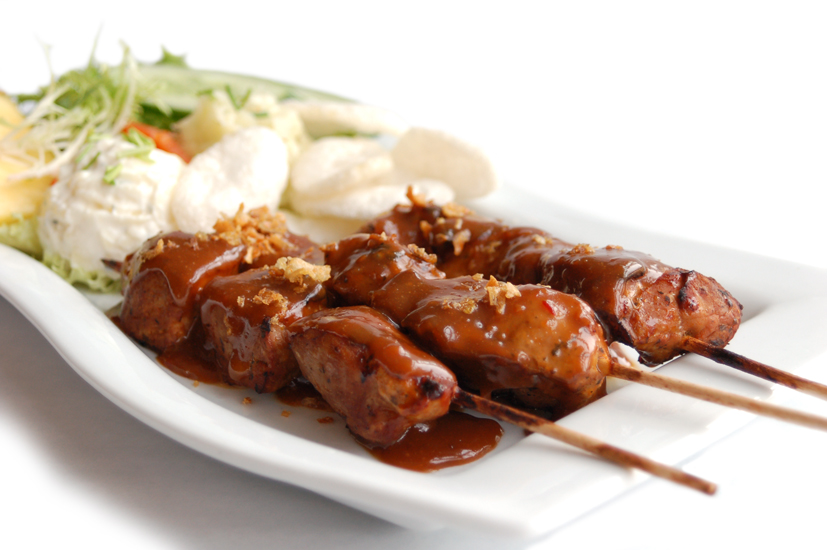
How To Make Sate


Things You'll Need:
  • 500 gram diced chicken breast (2cm)
  • 4 tablespoons sweet soy sauce (Kecap Manis)
  • 2 tablespoons vegetable oil or peanut oil
  • 3 shallots finely chopped
  • 2 teaspoons minced fresh ginger
  • 4 cloves garlic minced
  • 1 teaspoon Coriander powder
  • bamboo sweker
Instructions
  • Using large bowl, mix shallot, garlic, oil, coriander, ginger and sweet soy sauce.
  • Add the chicken to the bowl and let it marinate at least few hours. Usually I marinate it over night, so all of the ingredient will be absorb by the meat well. Cover the bowl with plastic wrap and let it sit in the refrigerator.
  • Stick 3 or 4 cubes of chicken breast to the skewer, depends on how big the cubes are. Don't throw the marinate sauce, you need to keep it during cooking time.
  • Lay the skewers on top of the grill in medium-high heat. Usually it will take about 2-4 minutes per side depends on how thick you cut the meat. Brush the meat before you flip it to other side.
  • Once few skewers are done, put them in the empty plates and you can use sweet soy sauce or peanut butter for dipping.

Read more...

Indonesian Pizza

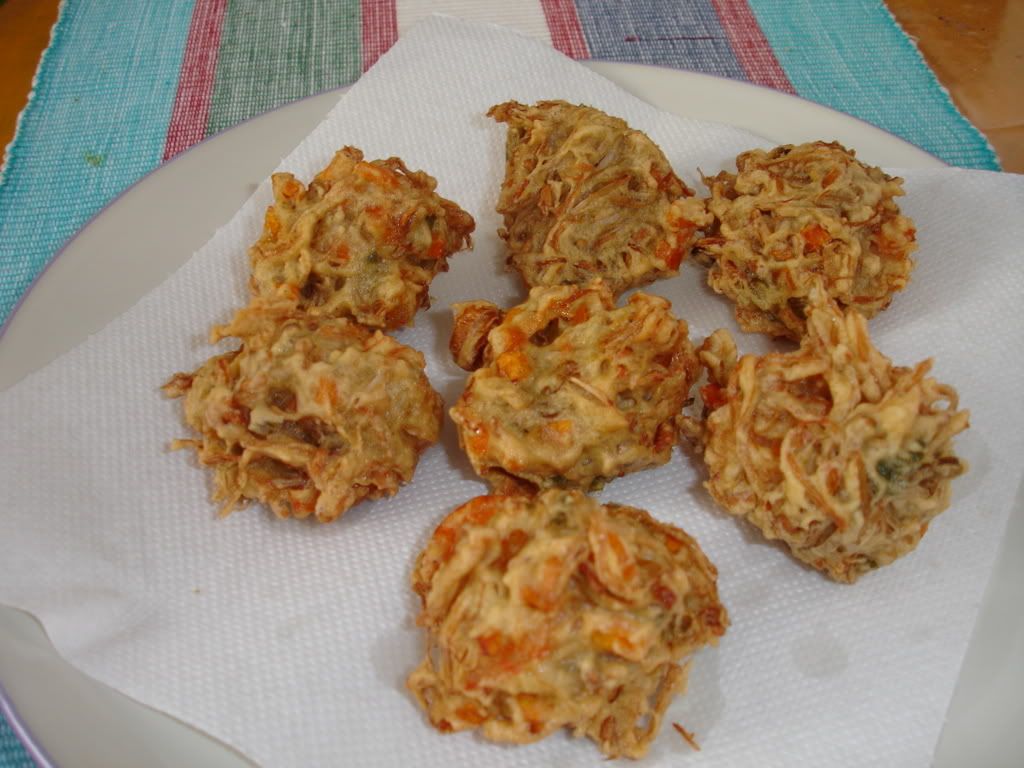
Shrimp vegetable fritter is originally called Bakwan Udang in Indonesia. In my country, normally this cuisine served during watching tv or gossiping with friends .


Here is the secret recipe

Ingredients

  • 100 gr of fresh bean sprout
  • 1 carrot (sliced like matches)
  • 125 gr of shrimp
  • 1 leek (sliced)
  • 1 tea sp of grated coriander
  • 1 tea sp of grated cummin
  • 1 tea sp of salt
  • 1/2 tea sp of pepper
  • 2 cups of all purpose flour
  • 1 egg
  • 1/2 liter of cooking oil (recommended to use special pan for french fries)

How to cook:
  • Mix everything in a big bowl while heating cooking oil in the pan
  • Use two table spoon to create fritter for the dough. Put the fritter in the hot cooking oil until it is ready.
  • Served while hot

Served with fresh chilli or chilli souce (for 4 people)

Read more...

APPLE, IDENTITY OF MALANG

Apple tree in Indonesia (especially in Malang) began to be known about the year 1908 before Indonesia proclaimed the independence. The Ducth was the first people who broughtit, and rearched good areas for apple growing. Batu is one of them, and above all it is the most suitable. The first apple variety grown in Batu was Rome Beauty.
About 1969, after Indonesia got its independence, the "Banaran Garden Institution" found a new apple variety,namely Manalagi Apple. The man who found it is Mr. Surahmat Kusumo, a senior fruittracker from "Balai Penelitian Hortikultura Pasar Minggu" (Horticultural Research Institution Pasar Minggu) Jakarta. This new variety was from Gandon village, because this variety was not found in Holand and other parts of the world; so this variety was finally considered as an Indonesian Apple. And, because of its nice taste, this apple is called "Manalagi" (Javanese, means: give me more)

http://www.eastjava.com/books/malang/html/identity.html

Read more...

Apples in Indonesia

Apples are grown in this part of the world, indeed. To be more precise, they are grown in East Java in the mountain region of Malang and Batu. The first apple tree sprouted up decades ago when a Dutchman with a green thumb tried to grow a four-season plant in a wholly different climate and on different soil too. Malang see-me to have the right temperature for apple growing. Situated on a level of 700-800 meter above sea surface, the first trees were doing surprisingly well despite the tropical climate. There was a large difference though between the European apple and his Malang grown sister, which became all too apparent when the first fruits were reaped. The apples were reportedly too sour for consumption. For a while people in Malang regarded the apple tree as a decorative shrub to have in the garden. The fruits went to waste usually as they were soon declared as quite inedible fruit. In several instances reports repeated that apple trees in other parts of the region were not even bearing fruits at all.

After world war 11 and after the country gained independence from the Dutch more people became interested in apple cultivation. Growth expanded considerably compared with the few and far in between shrubs from before the war. But the Malang apple remained a very unpopular fruit among Indonesians who clamored more for the imported stuff which was sweet and juicy. In time apple farmers were introduced to newer agricultural techniques which transformed the sour Malang apple into a fruit of refreshing taste and of a crunchy consistency. The people of Malang and thereabouts were plain delighted. Soon more apple orchardes were started, not only in Malang. The village of Batu followed suit and the uplands of Pasuruan, Mojokerto, Probolinggo, Ponorogo, Nganjuk, Magetan and further away, Madiun.

Malang still produces the largest yield with an annual crop of averagely 203.000
ton. A ministerial decree banning the import of foreign fruits that was issued in the early ens, reportedly drove up the apple crop in East Java. Apples from East Java are now in great demand with juice producents, bakeries, and everyday people since the homegrown fruits bear reasonable pricetags. With local apple consumption ever on the upswing, present crop yields are never enough to boost the country's export figures of local apples.

source :
http://www.asia-planet.net/indonesia/tropical-fruits.htm

Read more...

Jayawijaya Peak, a roaring mountain

>> Jumat, 25 Desember 2009


Jayawijaya Peak, a roaring mountain is permanently covered with snow, despite its location on the equator. We'll quite never forget meeting an awful-looking Dani, bearing the tusk of a wild pig at the tip of his nose. Despite their groovy looks, these are quite gentle people, shaking your hand politely and always having time for a small chat.

Likewise, women don't wear terribly much clothes. Just a skirt, entirely made of natural materials will do. It is the women's duty to carry out the heavy work on the fields. Observe the nuke, typical cloak-like bark string bags, carried half over the head. Heavily loaded with cabbage, sweet potatoes and sago, they resemble a blanket. A woman covered in river mud, is in grief. A less innocent way to show mourning, is finger amputation, a fate that only women will befall. Despite serious efforts of the government to halt this practice, they continue being reported occasionally.

The Baliem Valley remains one of the most fascinating places on the planet, where man may confront it its prehistoric past. But even in the remotest of area. Civilization is seeping through and will not be kept at bay. Maybe the time is right to visit the wild beauty of the Baliem Valley and its remarkable people.

http://www.indonesia-tourism.com/east-papua/baliem_valley.html

Read more...

Pangandaran Beach

Small mainland peninsula with a national park with beaches and stunning scenery to rival the beaches of Bali on the south coast of Java. Pangandaran is one of Java's best-kept secrets as far as international tourists are concerned, but has been extremely popular with locals for along, long time. A small fishing town, it possesses one of Java's finest beaches and Pangandaran Nature Reserve teems with wild buffalo, barking deer and monkeys. The people are very friendly, this combined with the idealize surroundings make this a great place to spend a few days relaxing island-style. Pangandaran is halfway between Bandung and Yogya, about 5 hours by bus from Bandung and 8 hours from Jakarta.

This is the second beach resort area on the Indian Ocean after Pelabuhan Ratu. The site is 223 from Bandung and 400km from Jakarta. The trip by car or bus is recommendable because the road conditions are good. However, if we prefer to take the train, get into Bandung-Yogyakarta Express train and get off at the Banjar railroad station about 4 hours later. From here it will be another 50 km by bus to Pangandaran. The beach is called Penanjung, where most of the cottages and hotels are located, however, of modest ratings. Nothing luxurious should be expected. Pangandaran is especially of interest to nature lovers, as there is a wildlife reserve in the vicinity where wild birds and other indigenous animals live about freely to be enjoyed by visitors. In Pangandaran visitors will like fine white beaches, blue ocean and fine seafood. Twelve kilometers before arriving at Pangandaran visitors will see a huge rock on the beach, which is called Karang Nini.

Another place of special interest for nature lovers is a forest Conservation Park, close to the camping ground, which has basic facilities suitable for the younger set. Somewhat further out, west of Pangandaran, driving 23 km on the way to Parigi, lays Batu Hiu, meaning Shark's Rock, a coastal rock that has the shark shape.

http://www.indonesia-tourism.com/west-java/pangandaran-beach.html

Read more...

KIng Sate

Raja Sate BBQ & Asian Resto
Jl. Boulevard No. 39
Manado
Phone: 0431 846679
Email: RajaSateResto@yahoo.com

No, there is no king that I met but... I was pleasantly surprised (maybe that happens too easily) when I brought my 2 kids to another new restaurant that opened in Manado. Living in a small town can often play tricks on your mind but this wasn’t a trick - the food was tasty, service quick and the atmosphere was pleasant both during the day and evening hours. Raja Sate, located at #39 Jl. Piere Tendean (boulevard), has a full variety of foods to choose from soups, sate, vegetables and even Ayam Kampung (local chicken not from the chicken farm). We arrived at 7:30 PM on a weekday and we were immediately seated, I chose a seat under a fan but you can find less breezy places if you like. The menu came immediately and we were actually served within 17 minutes of ordering - a new record for non fast-food restaurants. Drinks came without reminding the waitress well before the meals! My favorite is the goat sate which is served on its own little hibachi with accompaniments of Kangkung Cha (local spinach but better) and white rice served on a top of a banana leaf with a plate of course. We finished our meals, we thought but then the waitress graciously said sir, "please wait, here is your fruit". We finished our fruit with vows to return - we did and we were not disappointed!

Jeremy Barnes

Read more...

Bunaken National Park

The Bunaken National Marine Park was formally established in 1991 and is among the first of Indonesia's growing system of marine parks. The park covers a total surface area of 89,065 hectares, 97% of which is overlain by sparkling clear, warm tropical water. The remaining 3% of the park is terrestrial, including the five islands of Bunaken, Manado Tua, Mantehage, Nain and Siladen. Although each of these islands has a special character, it is the aquatic ecosystem that attracts most naturalists.

The waters of Bunaken National Marine Park are extremely deep (1566 m in Manado Bay), clear (up to 35-40 m visibility), refreshing in temperature (27-29 C) and harbor some of the highest levels of biodiversity in the world. Pick any of group of interest - corals, fish, echinoderms or sponges - and the number of families, genera or species is bound to be astonishingly high. For example, 7 of the 8 species of giant clams that occur in the world, occur in Bunaken. The park has around 70 genera of corals; compare this to a mere 10 in Hawaii. Although the exact number of fish species is unknown, it may be slightly higher than in the Philippines, where 2,500 species, or nearly 70% of all fish species known to the Indo-western Pacific, are found.

Oceanic currents may explain, in part, why Bunaken National Marine Park is such a treasure trove of biodiversity. Northeasternly currents generally sweep through the park but abundant counter currents and gyros related to lunar cycles are believed to be a trap for free swimming larvae. This is particularly true on the south side of the crescent-shaped Bunaken Island, lying in the heart of the park. A snorkler or diver in the vicinity of Lekuan or Fukui may spot over 33 species of butterfly fish and numerous types of groupers, damsels, wrasses and gobies. The gobies, smallish fish with bulging eyes and modified fins that allow them to attach to hard surfaces, are the most diverse but least known group of fish in the park.

Biologists believe that the abundance of hard corals is crucial in maintaining the high levels of diversity in the park. Hard corals are the architects of the reefs, without them, numerous marine organisms would be homeless and hungry. Many species of fish are closely associated with particular types of corals (folious, branching, massives, etc.) for shelter and egg-laying. Others, like the enormous Bumphead Parrotfish, Balbometopon muricatum, are "coralivores" and depend on hard corals for their sustenance. Bony mouth parts fused into an impressive "beak" allow these gregarious fish to crunch corals like roasted peanuts.

Some 20,000 people live on the natural resources of Bunaken National Marine Park. Although there are inevitable conflicts between resource protection and use by people, the Indonesian government is taking a fairly unusual and pragmatic approach to park management. The idea is to promote wise resource use while preventing overexploitation. Local communities, government officials, dive resort operators, local nature groups, tourists and scientists have played an active role in developing exclusive zones for diving, wood collection, fishing and other forms of utilization. Bunaken Marine Park has become an important example of how Sulawesi, and the rest of Indonesia, can work to protect its natural resources.

http://www.north-sulawesi.org/bunaken.html

Read more...

MOUNT BROMO


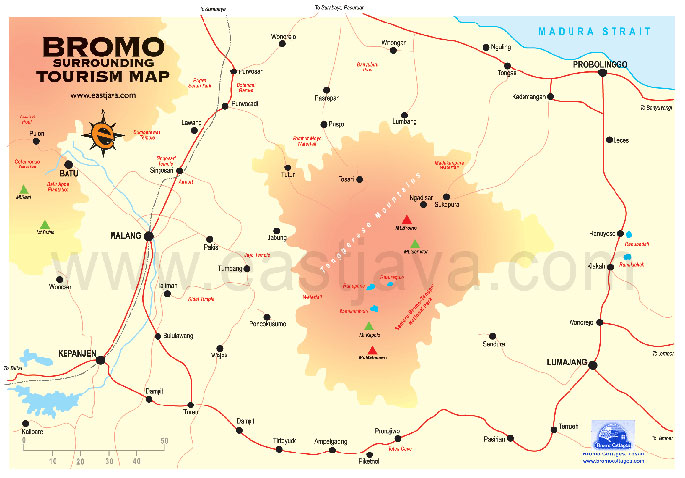
Bromo have known by all of visitor of the worlds. They come to Bromo to watch the sunrise. The visitor also can look down to the crater that full of its smoke, and feel the cold of the air, is probably could only be done in Bromo. Our eyes will also completed by the sea of sand that the way to reach Bromo’s peak. The main gate to the sea of sand and mount Bromo is through Cemorolawang. This is the most crowded visiting area, espesially on holidays. There are many kinds activities that could be carried on this area such as; Camping, watching the scenery, horse riding to sea of sand or walking.

To get to the peak Bromo with its largely open crater, which belch of smoke expelling from its bottom. Mount Bromo has settled by Tenggerese for about thousands years. They who are good of God follower and always do their custom strickly, has historical relationship with Majapahit. The Antropologist from our country or other country are interesting to do some research, because the Tenggerese are strickly in keeping custom for centuries, without influenced by world’s change. So there so many version of the unique of Tenggerese in

Probolinggo, it can be in the forth of tale, folktale, serat and kidung, legend and science report.As a good follower of God, which have Hinduism belief, they have many kinds of traditional ceremony such as; marriage ceremony, Entas-entas, Wilujengan Karo, Wilujengan Kapat, Wilujengan Kapitu, Wilujengan Kawolu, Wilujengan Kasanga, Wilujengan Kasada. Those of ceremony are lead by a person who supposed to have a magic power to make a communication with powerful things (roh halus) that called ‘Dukun’. However, the ancestor of Tenggerese are married couple named Rara Anteng (Teng) and Jaka Seger (Ger). The combination of the two syllables were than abbreviated as Tengger. They had not child for some years, then they decided to had a meditation. They orayed to God in order that he granted their wish. One day there is aa misterious voice that said: that one day when Sang Hyang Widhi (God) wanted to give them children, one of them had to sacrifice to Bromo Crater (Bromo Mountain).

Many days later, Rara Anteng birth her first son named Tumenggung Klewung, then followed by other children and they had 25 children. Firstly, they didn’t want to sacrifice one of their children, but they had a sign from Bromo that they must to keep the promise. Finally, their last son named Raden Kusuma had take by Bromo crater as a requirement for Dewata Sang Hyang Agung (God). Next, the misterious voice of Raden Kusuma gave an order to provide half of the harvest to be sent to Raden Kusuma in Bromo Crater every Full Moon at 14th, Kasada month. Because of that, every full moon at 14th in Kasada Month, people sent Raden Kusuma many kinds of harvest in Bromo mountain. That ceremony, which called “Yadnya Kasada” becomes a tradition (custom) that held up to know.

http://www.eastjava.com/tourism/probolinggo/bromo.html

Read more...

Pasuruan Tourism

Pasuruan regency is one of tourism place in East Java, which has potency of nature, culture and tourism attraction that be able to expose the completely tourism enchantment (The East Java Natural Enchantment).

Pasuruan is one of tourism object in East Java that has glamour nature and marvelous culture, such as panorama of mount Bromo seen from Penanjakan, or the fascinating of Tretes tourism area, the amazing of agro tourism area in Tutur, recreation area at Prigen, which presenting multifarious animals in Safari Park Indonesia II, the center of recreation and entertainment amusement of Taman Dayu, Fina Golf and there are still a lot of tourism object which is interesting to be visited.
Pasuruan regency is located 60 km south of Surabaya. Beside its tourism object, Pasuruan also has industrial area and crafting which has its own characteristic, such as; small industry and crafting of embroidery in Beji, Bangil, gempol, and Keraton. Crafting of wood in Prigen and Karangrejo. Crafting of accesories in Bangil and Gempol and also crafting of iron in Gempol and Poh Jentrek.

TAMAN SAFARI INDONESIA II
This tourism object is located at Jatiarjo village Prigen distric. This natural preserve is the branch of Cisarua - Bogor natural preserve. As the natural wild life, preserve Taman Safari Indonesia collects various wild animals. This wildlife preserve is 295 hectares, the wild animal such as : lion tiger, wild buffalo, komodo, rhinaceros, bison that live in open area. Lies at the slope of Mt. Arjuno 800 – 1.500-meter sea level cover 340 ha and divided three zones. Wild life zone, place for visitor observing a natural wild life. Attraction zone for performing education through entertainment attractions. Each Sunday we can see that circus of Taman Safari Indonesia Jl. Prigen. Baby zoo zone place for visitor to getting photos and closing to the baby animals. Taman Safari surrounded by the beautiful panorama and fresh atmosphere with temperature 24-25o C, it also has supporting facilities such as; recreational park for children. This location is easy to be reached. It take only 1 hours from Surabaya or Malang.

COBAN BAUNG WATERFALL
The waterfall is 100 meters high as one of natural attractions. It is located at Purwodadi village exactly in the east of Purwodadi Botanical garden. It has surrounded by a protected forest with various animals like monkey, deer, etc. It has provided camping ground.

APPLE AGRO TOURISM
The agro tourism is located at Andonosari village, Tutur subdistrict. It's about 40 km from Pasuruan city. The visitor can be relax and go around the Apple plantation.
If we want to pick some Apples by ourselves and eat them as many as we want, we have to pay a admission fee at first. The agro tourism covers an area about 1100 hectares and the apples which are planted consist of Manalagi, Rhomebeauty, Anna and Wanle.

KAKEK BODO WATERFALL
It is located at Tretes and belongs to Pasuruan forest range unit. It can be accessible from Surabaya for about 45 minutes drive. Kakek Bodo is an esthatic Forest lines are located at the Pasuruan Forest District, Forest Ranger unit of the west Lawang, Sub Forest Ranger of Prigen. It's about 35 km from Pasuruan. This recreational forest has surrounded by pine forest and other trees such as, Akasia (acacia decurrens). Kaliandra (Calliandra Calathyrsus) and Mahoni (Swientenia Macraphylla). In this area we can find the kakek Bodo Waterfall 40 meters high, the esthetic forest cross, recreational park for children, and the grave of Kakek Bodo.

SIEN ORCHID
Sien Orchid Garden collects many kinds of orchids and decorative plants, which is located on the way between Pandaan – Tretes. The visitor can see the beauty of orchids and buy them as souvenirs. In this garden is cultivated many kinds of orchid, which are preserved and for collection.

SKI LOT (MUD SURFING)
Ski Lot is the traditional attraction of Lekok fisherman. It is usually held annually on the seventh day of Idul Fitri (lebaran ketupat) in a field with full of mud. Ski Lot is an unique attraction because the competitor must catch a crab, a lele fish and an eel by surf on the mud. Not only men, but also women follow the competition. At the same time at Lekok beach, it is also held row race and decorative.

Read more...

Borneo

>> Rabu, 02 Desember 2009


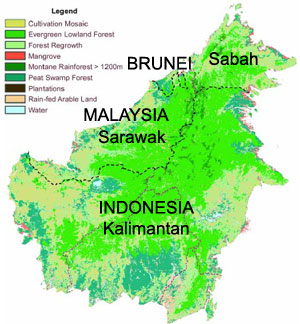
Borneo is surrounded by the South China Sea to the north and northwest, the Sulu Sea to the northeast, the Celebes Sea and the Makassar Strait to the east and the Java Sea and Karimata Strait to the south. It has an area of 743,330 square kilometres (287,000 sq mi).

To the west of Borneo are the Malay Peninsula and Sumatra. To the south is Java. To the east is the island of Sulawesi (Celebes). To the northeast is the Philippines.

Borneo's highest point is Mount Kinabalu in Sabah, Malaysia, with an elevation of 4,095 m (13,440 ft) above sea level. This makes it the world's third highest island.

The largest river systems are the Kapuas River, with approximately 1,143 km (710 mi) the longest river in Indonesia, the Rajang River in Sarawak with some 562.5 km (349.5 mi) the longest river in Malaysia, the Barito River about 880 km (550 mi) long and the Mahakam River about 980 km (610 mi) long.

Borneo is also known for its extensive cave systems. Clearwater Cave has one of the world's longest underground rivers. Deer Cave, thought to be the largest cave passage in the world, is home to over three million bats and guano accumulated to over 100 metres (330 ft) high.

http://en.wikipedia.org/wiki/Borneo

Read more...

HISTORY OF BANGKA ISLAND


During the 17th Century, Hindu people from Siantan and Johor of Malaysia inhabited Bangka Island. Subsequently it was occupied by Sriwijaya Kingdom (686 AD) who was written "Wangka" which means "Tin" on a stone, that's why Bangka Island is also called "Tin Island", the stone was found in the Western part of the island, near Kota Kapur, now the stone still can be seen at the National Museum in Jakarta.

Bangka was ceded to Britain by sultan of Palembang in 1812, but in 1814 it was exchanged with the Dutch for Cochin in India. The Japanese from 1942 to 1945 occupied the island. It became part of Indonesia independent in 1949. The island, together with neighboring Belitung, was formerly part of South Sumatra province, but in 2000 the two islands became the new province of Bangka-Belitung. Bangka is famous for two other events; the Banka Island Massacre in WWII by the Japanese of Australian Nurses and as reputedly the setting for the book "Lord Jim" by Joseph Conrad. Bangka is also home to a number of Indonesians communist that has been under house arrest since the 1960's and are not permitted to leave the island.


http://www.indonesia-tourism.com/bangka-belitung/history.html

Read more...

Raja Ampat Island

>> Rabu, 25 November 2009

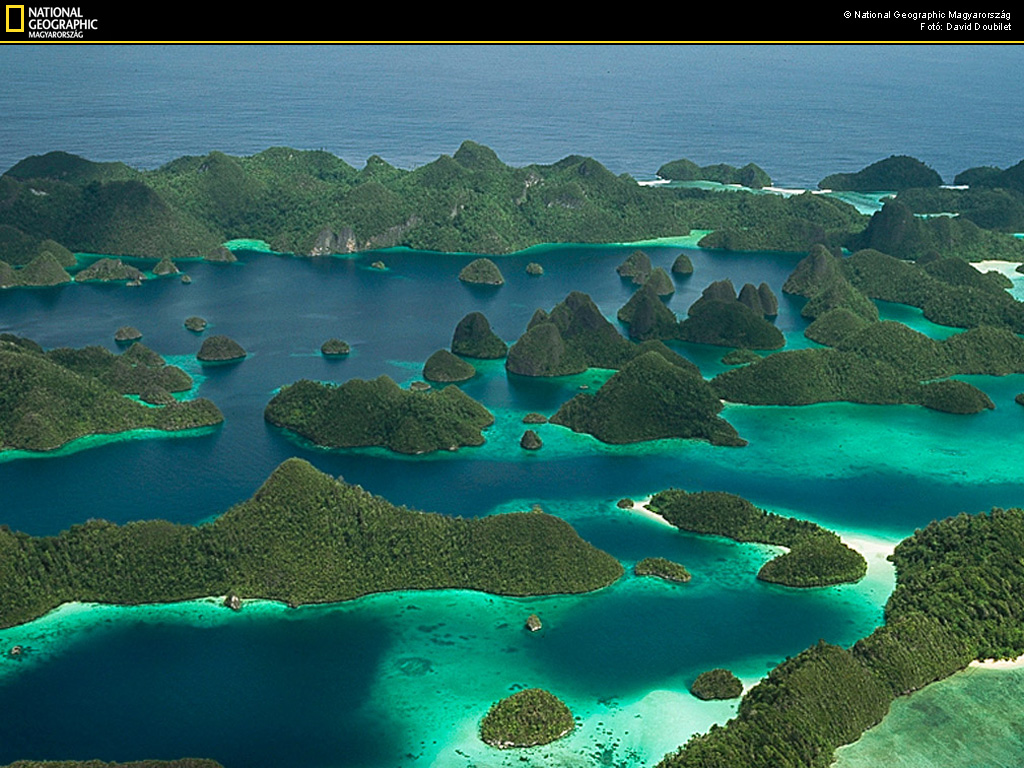
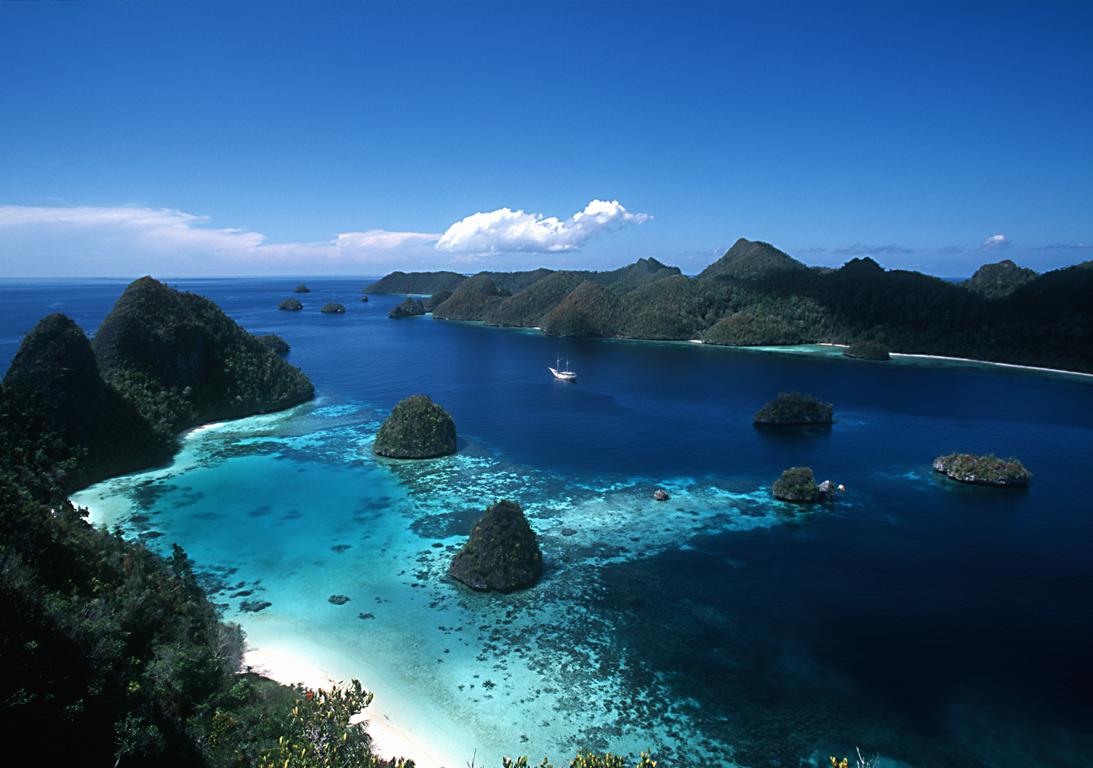
The Raja Ampat Island in Irian is group spreads out over a huge area and consists of over 610 islands. The four largest islands are Waigeo, Batanta, Salawati and Misool. The area's reefs are covered in a diverse selection of both hard and soft corals. Most of the areas reefs are pristine, with mile after mile of perfect hard corals, drift after drift of soft corals of many species and colors ranging from brilliant red, to shocking yellow pretty pink and exotic purple. Most reef dives are very colorful. The tourist would be able to experience the best dives sites within those islands, which include Cape Kri, Mellisa's Garden, Sardines Reef, The Passage, Nudibranch Rock, Wai Island Night Dive.

Raja Ampat is the western island of Papua Island. The name of Raja Ampat based on the legend. This area had begun with 6 eggs that found by King Waikew in Waigeo Island. But from the 6 eggs, just 5 eggs had crack. The last was become an egg stone till now on.

From the fifth eggs that had cracked, the 4 eggs was become men who become King of four big islands that is Waigeo, Batanta, Salawati and Misool. While the one egg became a woman, had wash away and stranded in Biak Island. That woman was born a child named Gura Besi that known as the historical man of Raja Ampat, because of his heroic story.

The regency that formed based on the constitution number 26 in 2002, is the development of Sorong regency on 12 April 2003. This area has 46.000 km2. But, 85% of this area is archipelago area. There are 610 islands in this area. But most of them have no social life. This regency has 10 districts and 85 villages with about 48.707 men.
Geographically, this area has strategic location. Its boundaries is:

North side: Pacific Ocean
West Side: North Maluku
South side: Maluku Sea
East Side: Sorong Regency

For the fauna sector, Raja Ampat has rarely fauna, such as; red birds of paradise (Paradise Rubra), Wilson birds of paradise (Cicinnurs Republica), Maleo Waigeo (Spilocuscus Papuensis), and rainbow fishes. Hence, for the flora, Raja Ampat has many kinds of Orchids, Waigeo palm, ironwoods or black woods, 'keruing', 'ulin' woods, etc.

Because of its various nature profit, Raja Ampat will declared by Maritime Ministry Freddy Numberi as ancient regency, based on its location that not only rich of fishes, but also its sea herb and the pearl.

http://www.indonesia-tourism.com/west-papua/raja_ampat.html

Read more...

The 4th Asian Vegetarian Congress


The 4th Asian Vegetarian Congress
VEGETARIAN: HEALTHY & ECO-FRIENDLY FOR ALL
Batam Island, 6 - 10 November 2009

Global warming. Probably, the issue has gained the greatest global concern and fear ever in human history. Its definite force of massive destruction is real, inconvenient and menacing from moment to moment. But, to those advocating vegetarian lifestyles, the issue is fundamental. It is not the fear. It is the urging necessity to promote a change in human lifestyles, a situation explicitly conjured by Albert Einstein over half a century ago.

Vegetarianism is basically a universal lifestyle of harmony. But it also represents the basic knowledge and the actual science of living harmoniously in the universe, which is all the actualisation of love for life. The motivation, spirit and determination of people going vegetarian are very clear, definite and firm: to bring health, welfare and harmony to life and Planet Earth. To serve the purpose stated above, the Organising Committee underlines the importance of developing more discussion on issues of information and education systems at the congress this time.

We believe it is urgent to establish better-organised systems to develop vegetarianism as a basic need for the sustainability of life and the environment in the world’s largest and most-densely populated continent Asia. Considering the strong traditional beliefs of Asian people in meat-consumption, let’s work out actual programmes to help them understand the benefits of going vegetarian, particularly for the reasons of health and environmental protection.

Now is also the time for the Asian Pacific vegetarian societies to begin establishing communication and friendship with health and environment groups in other parts of the globe, which is also an indispensable issue. I believe it is our hope that the forum can be a good opportunity for everyone to share their concern, experience, motivation, knowledge and expertise for the sake of the world. But the event can also be everyone’s joy in knowing one another from other parts of the planet. We warmly welcome you to the 4th Asian Vegetarian Congress, Batam Island, 6-10 November 2009.

For more details, please visit http://www.avc2009.org

Read more...

Toba Lake Party


JAKARTA, indonesia.travel--North Sumatra holds the annual Toba Lake Party (Pesta Danau Toba) in Parapat, Toba Lake, from 7 to 11 October 2009.

"Toba Lake is the North Sumatra's tourism icon," commented Gatot Pujonugroho, North Sumatran Vice Governor during the press conference in Jakarta.

In 2008, 152 thousands foreign visitors flocked to North Sumatra. This year, the North Sumatra Tourism Office predicts about 200 thousand visitors will come from Malaysia, Singapore, Australia, Japanese and European countries like Germany and Holland. This event is the North Sumatra's way of saying, "It's safe to come."

And maybe: "Let's party!"

Because the 2009 Toba Lake Party has it all: cultural and art performances, Toba Lake stage performances, culinary festival, Miss Toba Lake 2009, cultural exhibition, and marching band competition.

Consider yourself invited.


IHS
Source: Ant

Read more...

Ubud Dethrones Bangkok As The Best Asian City

Condé Nast Traveler magazine's 2009 Reader's Choice Awards holds exciting results. This year, 25,008 readers voted on more than 10,000 destinations. And what did they say?

Ubud, Bali has been voted as the friendliest town of all. And it also receives the honor as the Top City in Asia!

Ubud has been known for its culture and verdant vista. It's a peaceful town where on one hand you can find fine dining restaurants and spas and on the other, you can stumble upon paddy fields and various cultural ceremonies during your stroll around it. Temples and art galleries are abundant. The sight and atmosphere invites inspiration that many visitors come to spoil their muses. The Ubud Writers and Readers Festival, which is hailed by the Harper's Bazaar, UK, as "one of the six best literary festival in the world," is held annually in this town because of that reason.

Another reason why Ubud finally received its limelight might be because of Elizabeth Gilbert's Eat, Pray, Love. In the memoir, Gilbert conveyed how she finally was able to love once more after she visited Ubud. It's now in the production of becoming a movie, with the filming currently taking place in Ubud (Monkey Forest and the Art Market) and Jimbaran.

About the results, the Condé Nast Traveler Editor in Chief Klara Glowczewska commented, "It's clear that our readers are as devoted to the worldwide diversity of travel as ever." As these results prove that when it comes to find your favorite place to visit, no destination is too far.


The full list of winners is available on cntraveler.com at: cntraveler.com/readerschoice

Read more...

Tiara Hotel Medan


Tiara Medan's convention facilities are the finest in Medan, equipped with the latest in sophisticated meeting and audio visual equipment. Whether for exhibitions, wedding receptions, banquets or meetings, the range of function rooms make all occasions a success.

For discerning businessmen, Executive Rooms offer personalized services including an exclusive Lounge. Families will enjoy the comforts offered by the Presidential Suite and Executive Suite which incorporate tasteful design with modern-day convenience.

Apart from imaginative international cuisine, the region's rich cultural background is recreated in the variety of dishes prepared by talented chefs at the hotel's F&B outlets. Health, sport and recreational facilities provide diverse options for business and leisure guests, such as the tennis courts, squash court, the fitness club and sauna.

http://www.indonesia.travel/en/destination/273/tiara-hotel-convention-medan

Read more...

Sultan Riau Grand Mosque


Sultan Riau Grand Mosque is a famous historical tourist site on Penyengat Island, Tanjung Pinang, Kepulauan Riau province. This mosque was built when the island was the residence of Engku Puteri Raja Hamidah, wife of the Riau ruler, Sultan Mahmudsyah (1761—1812). Initially, this mosque was a simple wooden building with brick floors and about 6 meter tall towers.

Sultan Abdurrahman then invited participation from his people to help build a bigger mosque. People from many places around the Riau Lingga area came to the island to donate their materials, food and manpower.

Some said that due to abundant food supplies of rice, vegetables and eggs, workers were so bored eating eggs that they only ate the yolks and used the whites as adhesive material. The egg whites were mixed with sand and limestone to make this mosque which still stands strong today.

http://www.indonesia.travel/en/destination/171/sultan-riau-mosque

Read more...

  © Blogger template Simple n' Sweet by Ourblogtemplates.com 2009

Back to TOP